How to Handle Insurance and Repairs After a Car Accident
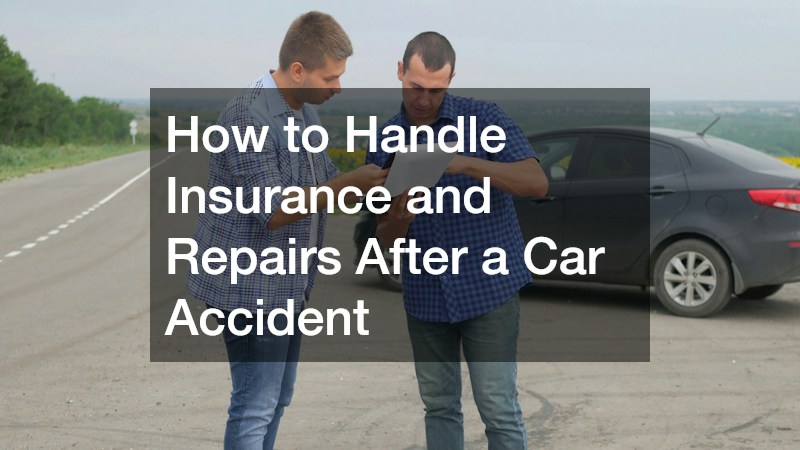
The moments immediately following a car accident are often a blur of adrenaline, confusion, and stress. Once you have ensured that everyone involved is safe and the immediate danger has passed, a second, often more protracted challenge begins: dealing with insurance companies and restoring your vehicle to its pre-accident condition. For many drivers, this process feels like navigating a maze without a map. Policy language can be dense, insurance adjusters are incentivized to minimize payouts, and the true extent of a vehicle’s damage is rarely visible from a casual glance at the exterior.
The financial and safety stakes are incredibly high. Accepting a hasty settlement or cutting corners on repairs can leave you with a vehicle that is structurally compromised, unsafe to drive, and significantly diminished in value. Furthermore, out-of-pocket expenses can quickly skyrocket if you do not understand how to properly leverage your coverage.
Immediate Steps to Take at the Scene to Protect Your Claim

The actions you take in the first thirty minutes following a collision establish the foundation for your entire insurance claim. Even if you are shaken, capturing objective data immediately is vital because physical evidence disappears quickly, and memories fade. Your primary objective at the scene—after ensuring safety—is to compile an undeniable record of the event that prevents the other party’s insurer from shifting blame or minimizing the severity of the impact.
How to Document the Scene Like a Pro
To build an airtight record, begin by capturing the macro-environment before narrowing your focus to individual vehicle details. Take wide-angle photographs of the entire intersection or roadway, noting traffic signals, skid marks, road debris, and weather conditions. These environmental factors often tell a clearer story of liability than vehicle damage alone.
Next, document the vehicles themselves. Photograph the final resting positions of all cars involved from multiple angles. When photographing damage, take close-up shots as well as medium-distance photos that show where the damage sits relative to the rest of the vehicle. Ensure you capture the license plates, make, model, and registration stickers of every car. Exchange essential data with the other motorists, including names, phone numbers, policy numbers, and driver’s license details, but strictly avoid discussing fault or apologizing, as these statements can be used against you later by an automotive insurance provider.
Finally, always call law enforcement to the scene, regardless of how minor the damage appears. A formal police report provides an unbiased, third-party narrative of the incident. This document is considered a definitive source of truth during the early stages of a claim, making it much harder for an opposing insurer to dispute the basic facts of the collision.
When to Call in a Legal Professional
While minor fender-benders involving only property damage can usually be handled directly through your insurer, accidents resulting in physical discomfort require a different approach. Adrenaline frequently masks pain, meaning minor stiffness at the scene can evolve into severe whiplash, soft-tissue damage, or spinal issues days later. Seeking a medical evaluation immediately establishes a direct timeline linking your injuries to the crash.
If you experience persistent pain, face mounting medical bills, or find that the insurance adjuster is trying to rush you into a quick settlement, it is time to seek professional representation. Insurers often use automated software to calculate lowball settlement offers early in the process, hoping vulnerable drivers will sign away their rights. Engaging an experienced injury lawyer ensures that your long-term health needs, lost wages, and pain and suffering are accurately calculated and aggressively defended throughout the negotiation process.
Navigating the Insurance Valuation and Settlement Process

Once the initial paperwork is filed, the process shifts from documenting the accident to assessing the financial value of the damage. This phase determines whether your car will be repaired or declared a total loss. Understanding how insurance companies calculate these figures allows you to spot discrepancies and advocate for a fair payout.
Demystifying the Vehicle Valuation Process
After a claim is opened, an adjuster will review the photos and police reports to estimate the cost of repairs. If the estimated cost to fix the vehicle approaches a specific percentage of its actual cash value—typically between 70% and 80%, depending on state regulations—the insurer will deem the vehicle a total loss.
To ensure the insurer’s math aligns with reality, you must understand the mechanisms of an insurance claims appraisal. The appraiser evaluates your vehicle’s mileage, options, trim level, and pre-accident condition against recent local sales of comparable vehicles. To prevent the insurer from using low-quality comparisons, compile a comprehensive folder containing your vehicle’s complete maintenance history, receipts for recently replaced components (like new tires or a new battery), and a list of any aftermarket upgrades. Proving that your car was in excellent mechanical condition prior to the crash forces the appraiser to adjust their valuation upward.
What to Do If Your Estimate Comes Back Too Low
It is common to receive an initial repair or total loss estimate that feels inadequate. Insurance estimates are frequently written using the lowest local labor rates and alternative, non-factory parts. If the payout offer does not cover the true cost of restoration, you do not have to accept it.
- Check your policy for an Appraisal Clause, which grants you the right to hire an independent appraiser to conduct a separate review if you and your insurer hit a stalemate.
- Request a line-by-line breakdown of the insurer’s estimate to identify omitted items, such as diagnostic scans or necessary blending of paint onto adjacent panels.
- Challenge structural or cosmetic discrepancies directly, ensuring the insurer provides adequate funding for specialized tasks like a professional bumper repair rather than suggesting a cosmetic patch-up on a component that is fundamentally cracked or structurally weakened.
Restoring Visible Structural and Aesthetic Damage
With a fair estimate or settlement pathway established, the physical restoration of your vehicle begins. This stage is about more than making the car look good; it is about restoring the structural integrity that protects you in a future collision.
Your Right to Choose Where Your Car is Fixed
A frequent point of friction between policyholders and insurance companies is where the vehicle will be repaired. Insurers often guide drivers toward their “preferred” or “direct repair program” facilities. While these shops offer convenience, they have agreements with insurers to keep repair costs low, which can sometimes conflict with your best interests.
In almost every jurisdiction, you possess the legal right to select any auto body shop you trust. When selecting a facility, look for certifications such as I-CAR Gold Class, which indicates technicians are trained in the latest collision repair techniques. Ask the shop manager whether they utilize Original Equipment Manufacturer parts or aftermarket alternatives. While insurers prefer cheaper aftermarket components, OEM parts guarantee an exact fit and maintain your vehicle’s original crash-test safety ratings. A high-quality independent shop will fight on your behalf to get the insurer to approve factory-spec components.
Addressing the Critical Safety Components Beneath the Surface
Collision energy travels through a vehicle’s frame along engineered paths called crumple zones. While the exterior sheet metal absorbs some of this force, the underlying safety systems bear the brunt of the impact. A quality restoration must look deep past the surface panels to ensure these foundational elements are intact.
- Crumple zones are designed to deform to protect the cabin, but once bent, they cannot be safely straightened without specialized frame-realignment machinery.
- Airbag sensors, seatbelt pretensioners, and anti-lock braking modules must be scanned and tested, as a violent impact can jar internal electronics without triggering a dashboard warning light.
- The kinetic force of a crash often causes immediate or delayed hydraulic failures, meaning a comprehensive brake repair must be conducted to replace strained lines, warped rotors, or damaged calipers before the vehicle is deemed safe for family transport.
Correcting Invisible Mechanical and Diagnostic Issues
While crumpled fenders and scratched paint are obvious, the mechanical damage hidden beneath the hood and chassis can be far more insidious. Mechanical systems are tightly packaged in modern vehicles, meaning an impact to the front or side of a car can easily displace heavy drivetrain components, causing issues that manifest weeks after the initial repair.
Spotting Signs of Hidden Powertrain Damage
The engine and transmission are mounted on specialized rubber and metal brackets designed to absorb engine vibration and, in a severe crash, snap to allow the powertrain to drop beneath the passenger cabin. Even a moderate collision can crack these mounts or shift the entire drivetrain out of its precise alignment.
When a vehicle is struck, the sudden deceleration puts immense rotational stress on the internal gears, driveshafts, and seals. This stress can cause internal fluid leaks or lead to hairline fractures in the aluminum housings of the drivetrain. If your car exhibits fluid puddles, rough shifting, delayed gear engagement, or strange whining noises after an accident, a general body repair technician may not have the diagnostic tools to pinpoint the root cause. In these instances, you should request that your insurer cover an inspection by a dedicated transmission mechanic who can perform pressure tests and electronic diagnostics to uncover hidden internal trauma.
Handling Complex Structural and Steering Component Issues
The suspension system is the bridge between your car’s frame and the road, consisting of a complex network of control arms, ball joints, struts, and stabilizer bars. Because these components are designed to be rigid yet responsive, the lateral force of an accident—such as being T-boned or sliding into a curb—can easily bend or fracture them.
Driving a vehicle with compromised suspension components is incredibly dangerous, as it severely degrades your ability to steer and control the car during emergency maneuvers. A bent control arm or damaged strut changes how weight transfers during braking and cornering. To rectify this, the repair facility must perform an intensive auto suspension service. This process involves stripping down the impacted wheel wells, measuring suspension geometry against factory specifications, and replacing any component that deviates even slightly from original tolerances.
Completing Final Safety Checks Before Signing Off
The final phase of the post-accident journey occurs when the shop informs you that the repairs are complete. Before you sign the release forms and drive away, you must conduct a rigorous quality control inspection. Once you accept the keys and drive off the lot, proving that a remaining issue was caused by the accident becomes significantly more difficult.
Ensuring Your Vehicle Tracks Straight and True
A vehicle can look flawless under the shop’s diagnostic lights but reveal severe issues once it reaches highway speeds. The ultimate test of a vehicle’s structural restoration is how it handles real-world road conditions.
- Request a printout of the final alignment specifications, which proves the shop executed a comprehensive wheel alignment service to bring the caster, camber, and toe angles back to factory defaults.
- Conduct a thorough test drive on both local roads and highways, checking if the steering wheel sits perfectly centered when driving straight.
- Feel for any pulling to one side, vibrations in the steering column, or unusual tire noise, all of which indicate that the suspension or frame geometry is still unaligned.
- Verify that advanced driver assistance systems, such as lane-keeping assist and adaptive cruise control, have been electronically recalibrated, as these systems rely entirely on precise physical alignment to function correctly.
Inspecting the Rubber for Hidden Collision Stress
Tires are frequently overlooked during post-accident inspections because they are made of flexible rubber, but they absorb an immense amount of energy during a crash. A tire that looks fine at a glance may have sustained internal structural failure that compromises its integrity.
During a collision, a tire can be pinched violently between the wheel rim and the obstacle, tearing the internal steel belts or nylon cords. This damage often manifests later as a dangerous sidewall bubble or slow air leak. Inspect the tread and sidewalls carefully for abrasions, deep cuts from torn sheet metal, or embedded debris. While a minor puncture in the center tread can be resolved with a standard car tire repair, any damage to the sidewall or shoulder requires a complete tire replacement. Ensure that if one tire is replaced, the opposing tire on the same axle matches in tread depth to prevent drivetrain strain and maintain balanced braking traction.
Successfully managing a car accident claim requires patience, diligence, and an unwillingness to compromise on safety. From the initial collection of evidence at the scene to the final inspection of mechanical and structural repairs, your active involvement dictates the quality of the outcome. Remember that insurance policies are binding contracts, and you have the legal right to demand that your vehicle be restored to factory safety standards using qualified professionals. By staying informed, tracking every step of the documentation process, and ensuring that both visible cosmetic damage and hidden mechanical issues are fully addressed, you can confidently return to the road knowing your vehicle is secure, reliable, and safe.