The Post-Crash Restoration Blueprint From Physical Recovery to Vehicle Overhaul
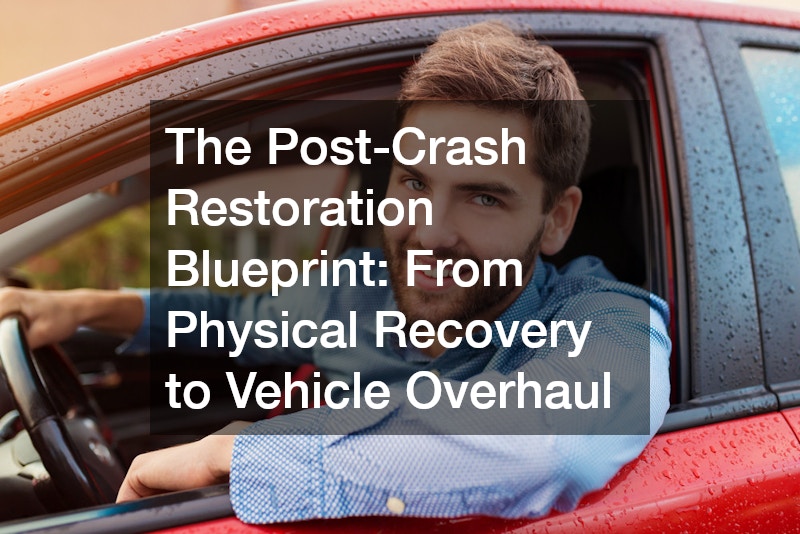

Experiencing a sudden motor vehicle collision is an overwhelming event that demands immediate action across multiple fronts. In the wake of an accident, drivers often find themselves managing physical recovery, legal considerations, and extensive vehicle repairs simultaneously. Navigating this multi-step process requires a clear, organized strategy to ensure that personal health, financial rights, and vehicle safety are all fully protected. From seeking proper medical care and securing legal representation to executing comprehensive mechanical overhauls and cosmetic refinishing, a structured recovery plan provides a reliable pathway back to normalcy. This guide outlines the essential stages every vehicle owner should follow to achieve a complete personal and automotive recovery after a crash.
1. The Immediate Physical Impact and Post-Collision Health
A vehicle collision unfolds in milliseconds, leaving drivers shaken, confused, and thoroughly overwhelmed. High-stress situations flood the human body with adrenaline, effectively masking physical pain and dulling sensory reactions. In the moments following a crash, individuals often exit their vehicles believing they walked away completely unscathed simply because no bones are broken or skin cut. However, physical trauma resulting from sudden deceleration rarely manifests immediately, often taking days to surface fully.
Soft tissue injuries represent one of the most common yet underestimated consequences of motor vehicle accidents. The rapid back-and-forth whipping motion of the neck subjects delicate muscles, spinal ligaments, and tendons to extreme mechanical strain. Victims frequently wake up twenty-four to forty-eight hours later suffering from stiffness, persistent headaches, upper back discomfort, and severely restricted range of motion. Seeking immediate medical care for whiplash ensures that soft tissue damage is accurately diagnosed and documented by healthcare professionals through physical examinations and diagnostic imaging. Early intervention through chiropractic care, targeted physical therapy, and anti-inflammatory treatments prevents temporary soreness from mutating into chronic spinal pain. Medical documentation also establishes a clear timeline linking physical injuries directly to the incident, protecting the victim when filing subsequent healthcare claims. Prioritizing physical recovery forms the absolute groundwork of post-accident restoration. A vehicle can always be rebuilt, but personal health requires immediate, uncompromised attention from qualified doctors.
2. Protecting Financial Interests and Managing Legal Claims

Navigating insurance procedures while recovering from physical injuries creates immense emotional and financial stress for drivers. Insurance adjusters are trained to contact crash victims quickly, frequently attempting to secure recorded statements or offer rapid monetary settlements before the true extent of injury is known. Accepting an early settlement offer is a common mistake, as it often fails to cover long-term rehabilitation costs, delayed medical complications, or hidden mechanical defects within the damaged vehicle.
Partnering with an experienced auto accident attorney provides crucial protection against aggressive insurance tactics and unfair claim valuations. A legal advocate thoroughly reviews police accident reports, gathers witness testimony, evaluates medical records, and calculates the true cumulative cost of the collision. This comprehensive evaluation accounts for current medical bills, projected future therapy, lost wages due to time off work, and complete vehicle repair expenses. Having legal counsel allows drivers to redirect their full energy toward physical healing while professionals handle complex insurance negotiations. Additionally, legal representatives ensure that all official paperwork gets filed within strict statutory deadlines, preventing insurance companies from denying legitimate property damage or personal injury claims. Establishing legal protection early in the process creates a solid foundation, allowing vehicle owners to turn their focus toward mechanical assessment and vehicle restoration without financial uncertainty hanging overhead.
3. Evaluating Structural Damage and Structural Restoration
Once physical health and legal safeguards are established, attention shifts directly to evaluating vehicle damage. Modern automobiles feature complex crash-crumple zones designed to absorb impact energy and protect human occupants. Consequently, a vehicle involved in a collision often suffers extensive internal structural damage that remains entirely hidden behind slightly scuffed plastic bumpers, bent fenders, or misaligned body panels.
Arranging a thorough auto repair evaluation ensures that every structural element gets inspected by trained collision specialists. Automotive technicians utilize computerized laser frame-measuring systems to check chassis alignment against exact factory specifications down to the millimeter. Even a subtle twist in the vehicle frame compromises structural integrity, leading to uneven tire wear, unstable emergency braking, and severely reduced crash protection during future impacts. Mechanics also inspect suspension control arms, tie rods, wheel bearings, and subframe crossmembers for hairline fractures or mechanical bending caused by impact forces. Addressing structural issues before starting cosmetic bodywork guarantees that the vehicle remains structurally sound and safe for highway driving. Skipping comprehensive structural testing risks placing a dangerous vehicle back on public roads. Professional structural restoration ensures that every safety feature engineered into the frame functions exactly as intended.
4. Technical Diagnostics and Certified Mechanical Services
Vehicles on the road today operate as sophisticated mobile computer networks powered by microprocessors, electronic sensors, and complex mechanical hardware. Collision impacts frequently trigger internal electronic errors, disable safety systems, and damage engine components without causing immediate, obvious fluid leaks or outer cosmetic damage. Repairing these advanced vehicle systems requires technical expertise far beyond standard bodywork techniques.
Entrusting the vehicle to a qualified car mechanic service ensures that certified technicians run complete electronic diagnostics across all onboard computers. Mechanics scan engine control modules, airbag control units, and antilock braking systems to identify and clear fault codes stored during the impact. They perform physical inspections of motor mounts, cooling lines, exhaust manifolds, and fuel delivery systems to catch subtle damage caused by engine displacement during impact. Specialized diagnostic equipment checks fluid pressures, electrical ground connections, and alternator charging rates to prevent unexpected mechanical breakdowns after the vehicle returns to the road. Following mechanical repairs, technicians conduct comprehensive road tests under real-world driving conditions to verify throttle response, braking balance, and steering stability. Working with certified mechanical experts ensures that every internal system operates smoothly, providing long-term reliability and complete peace of mind.
5. Overhauling Severely Damaged Driveline Assemblies
High-energy impacts deliver tremendous physical forces straight through the front subframe and engine bay. These forces can crack heavy transmission cases, bend internal input shafts, break torque converters, and destroy delicate planetary gear sets. When severe driveline damage occurs, minor spot repairs or fluid flushes are rarely sufficient to guarantee smooth power delivery or long-term vehicle operation.
In situations involving catastrophic internal failure, proceeding with complete transmission replacements offers the safest and most reliable path forward. Technicians remove damaged gearboxes, inspect flex plates and flywheels for cracks, and install factory-rebuilt or brand-new transmission assemblies. Fresh units eliminate slipping gears, harsh shifting, fluid leaks, and internal overheating issues caused by bent internal shafts or contaminated fluid channels. Installing a new unit requires precise mechanical alignment with the engine block, proper connection of external cooling lines, and accurate electronic calibration of shifting solenoids. Certified technicians reprogram vehicle computers to recognize the new assembly, ensuring smooth shifting and optimal fuel efficiency. Overhauling broken driveline components restores original acceleration dynamics, protects the engine from excessive rotational drag, and ensures the vehicle operates dependably under demanding driving conditions.
6. Restoring Interior Climate Control and Defrost Systems
Air conditioning components reside at the very front of the vehicle’s engine compartment, making them exceptionally vulnerable to front-end collisions. Condensers crush easily upon impact, causing pressurized refrigerant gas to leak out into the atmosphere instantly. High-impact shocks can also snap rigid aluminum refrigerant lines, damage climate control wiring, and crack internal compressor housings.
Executing thorough car AC repairs involves replacing destroyed condensers, fitting fresh high-pressure lines, and installing new receiver-driers to capture internal moisture and debris. Technicians perform deep vacuum pressure tests on climate control systems to remove trapped air and moisture before recharging them with precise amounts of factory-recommended refrigerant and synthetic lubricating oil. Restoring climate control functionality does much more than keep passengers cool during warm summer months. Automotive climate control systems actively dehumidify air routed to windshield defrosters, making them vital safety components during cold, rainy, or foggy driving conditions. Fully operational defrosting systems clear moisture off windows rapidly, preserving driver visibility when road conditions turn hazardous. Completing climate control repairs guarantees year-round cabin comfort while ensuring that window defrosting systems operate efficiently when driving in severe weather.
7. Utilizing Authentic Factory Parts for Safety Assurance
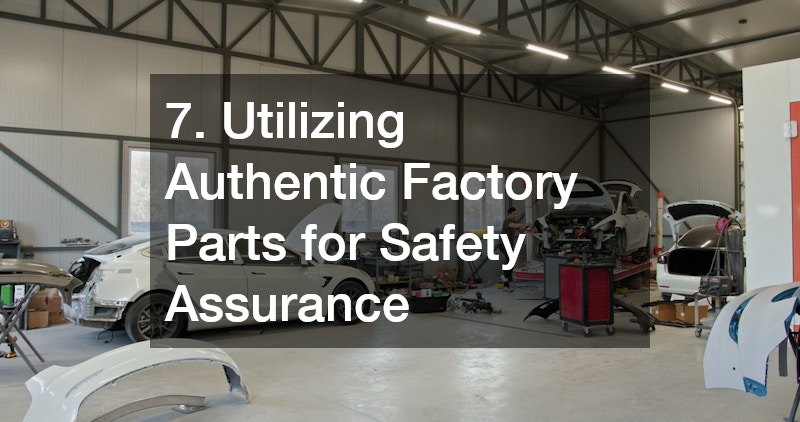
The long-term durability and safety of a restored vehicle depend heavily on the quality of replacement components used during repairs. Inferior, low-cost aftermarket parts often feature inconsistent material strength, poor dimensional accuracy, and weak corrosion resistance. Utilizing substandard parts can compromise crash-crumple zones, cause premature component failure, and void remaining vehicle warranties.
Sourcing components through a trusted auto part service ensures that every single installed piece meets stringent original equipment manufacturer standards. Authentic replacement parts fit precisely into place without requiring aggressive panel modification, drilling, or structural bending during installation. Certified replacement components—from suspension control arms and radiator supports to factory wiring harnesses—restore the vehicle to its exact pre-accident structural standards. In addition, original equipment parts come backed by comprehensive manufacturer warranties, providing financial protection against unexpected component defects down the road. Demanding high-quality factory components during insurance claim negotiations protects vehicle resale value and ensures long-term operational integrity. Using authentic components guarantees that safety features, structural crumple zones, and electronic sensors perform exactly as engineered in the event of an emergency.
8. Structural Glass Replacement and Sensor Calibration
Modern automotive windshields are far more than transparent barriers protecting occupants from wind and debris. Glass panels serve as integral structural support elements that reinforce cabin roof strength during vehicle roll-overs. Furthermore, windshields house sensitive camera units and radar sensors used by modern advanced driver assistance systems. Collisions frequently cause deep star cracks, spiderweb fractures, or complete windshield shattering.
Installing fresh auto glass requires complete removal of broken panels, meticulous cleaning of the vehicle’s pinch-weld, and application of high-strength industrial polyurethane adhesives. Certified glass technicians install structural panels carefully to establish an airtight seal, eliminating wind noise and preventing water intrusion during heavy rainfall. Proper glass installation ensures that passenger-side airbags deploy correctly against the windshield surface during forward impacts. Following physical glass installation, technicians calibrate optical cameras and radar sensors mounted behind the glass using specialized target boards. Systems like lane-departure warnings, automatic emergency braking, and adaptive cruise control rely on precise optical positioning through clean glass surfaces. Proper sensor calibration ensures that advanced driver assistance systems monitor road conditions accurately, keeping occupants safe on every drive.
9. Cabin Decontamination and Interior Detailing
Vehicle collisions leave behind severe interior messes that pose health risks to occupants. Airbag deployments release clouds of sodium azide or cornstarch propellants that settle into seat upholstery, carpet fibers, and air vents. Broken window glass scatters microscopic shards across footwells, door pockets, and seating seams, posing injury hazards to passengers and pets.
Hiring a professional auto detailer ensures that toxic chemical residue, glass fragments, and lingering odors are completely removed from the interior cabin. Detailing specialists use commercial-grade HEPA vacuum systems, hot-water extractors, and thermal vapor steamers to deep-clean upholstery, floor mats, and headliners. They clean climate control ductwork thoroughly, removing airborne chemical dust before occupants breathe it through the cabin ventilation system. Interior detailing also addresses cosmetic damage on dashboard panels, leather seats, and center consoles, restoring interior surfaces to pristine condition. Removing toxic residues and physical debris transforms an unsettling reminder of a highway collision back into a clean, comfortable, and inviting driving environment. Thorough interior decontamination allows drivers and passengers to enter the vehicle with complete confidence in their personal health and safety.
10. Exterior Paint Protection and Surface Preservation
Following structural repairs and panel refinishing, newly applied automotive paint requires specialized protective care. Fresh body paint remains susceptible to environmental damage, chemical staining, bird droppings, road salt, and ultraviolet radiation during its initial curing phase. Without adequate surface protection, freshly painted panels rapidly lose their deep shine and develop unsightly swirl marks, water spots, or premature oxidation.
Applying a professional automotive coating creates a durable chemical bond over body paint, forming a resilient, glossy barrier against environmental contaminants. Modern ceramic and polymer coatings feature hydrophobic properties that repel rainwater, road grime, and mud effortlessly, making routine vehicle washing fast and simple. The protective layer shields paint clear coats against UV radiation, preventing fading and clear-coat failure caused by intense sunlight exposure. Additionally, surface coatings guard exposed metal edges and undercarriage seams against rust formation caused by winter road salts and humidity. Preserving exterior paint finish enhances visual appeal, preserves vehicle resale value, and maintains structural body panels for years to come. Applying advanced paint protection completes the physical restoration process, returning the vehicle to the road looking showroom-fresh.
11. Complete Recovery and Returning to the Road Safely
Overcoming a serious vehicle accident requires patience, organized planning, and reliable support across multiple disciplines. Following a structured post-crash roadmap ensures that no critical aspect of physical health, legal rights, or vehicle restoration gets overlooked during recovery.
By prioritizing medical evaluations, securing appropriate legal guidance, and insisting on uncompromised mechanical and cosmetic repairs, drivers navigate post-crash challenges with complete clarity. Vehicles restored using authentic components, precise structural diagnostics, and high-quality protective coatings perform safely and reliably for thousands of miles. Taking a methodical approach turns a stressful collision into a fully resolved situation, empowering drivers to step back into their vehicles with total trust and peace of mind on the open road.